The packaging life cycle: the four ages of a package
The container as a period of time with a shape
Every piece of packaging has a biography. Its life cycle begins on a production line, ages in a warehouse, performs its role on a retail counter, and finally comes to an end in a home or at a recycling plant. The industry often describes packaging simply as an object—a bottle, a bag, a box—but that perspective falls short.
A container is not a thing; it is a period of time with a shape.
Buying a container is not just purchasing an object; it is purchasing the years of shelf life that the object is capable of protecting. This is the chronology of packaging, and understanding it changes how companies select their packaging.
1. Origin: the packaging line
The first second: material, form, and barrier
The life of a package begins before the product it will contain even exists. The moment the material is shaped, decisions have already been made that will determine its behavior for years to come: the choice of polymer or glass, the wall thickness, the number of layers in a composite film, the geometry of the closure. A multilayer package with an aluminum barrier is not more expensive for no reason; it is more expensive because it exists within a different timeframe. The material is, in essence, a temporal statement.
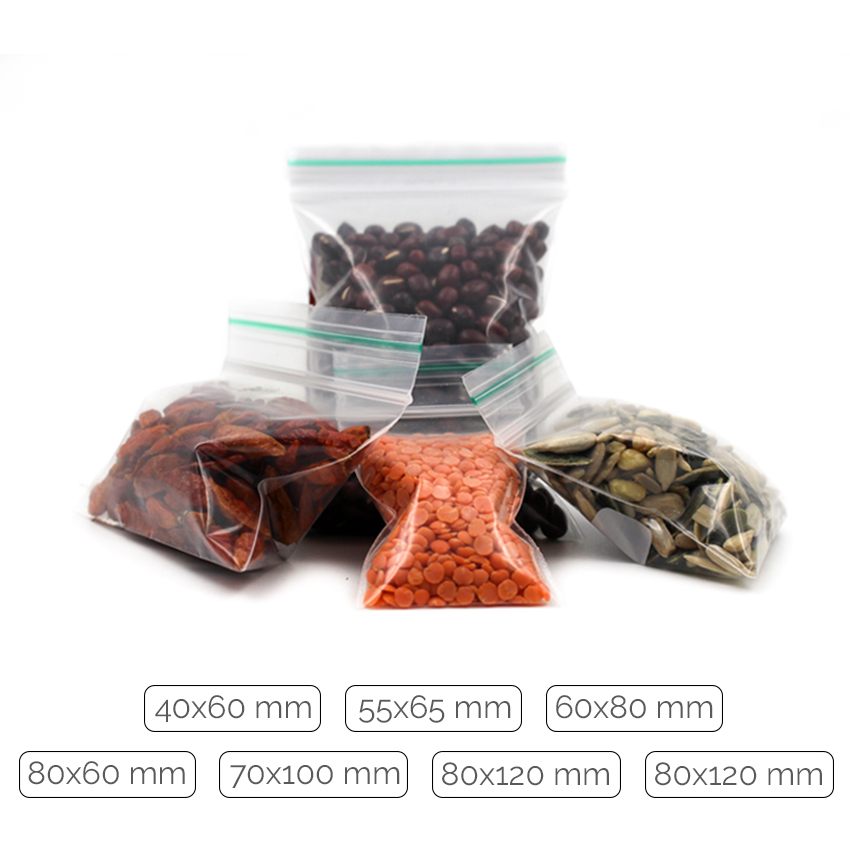
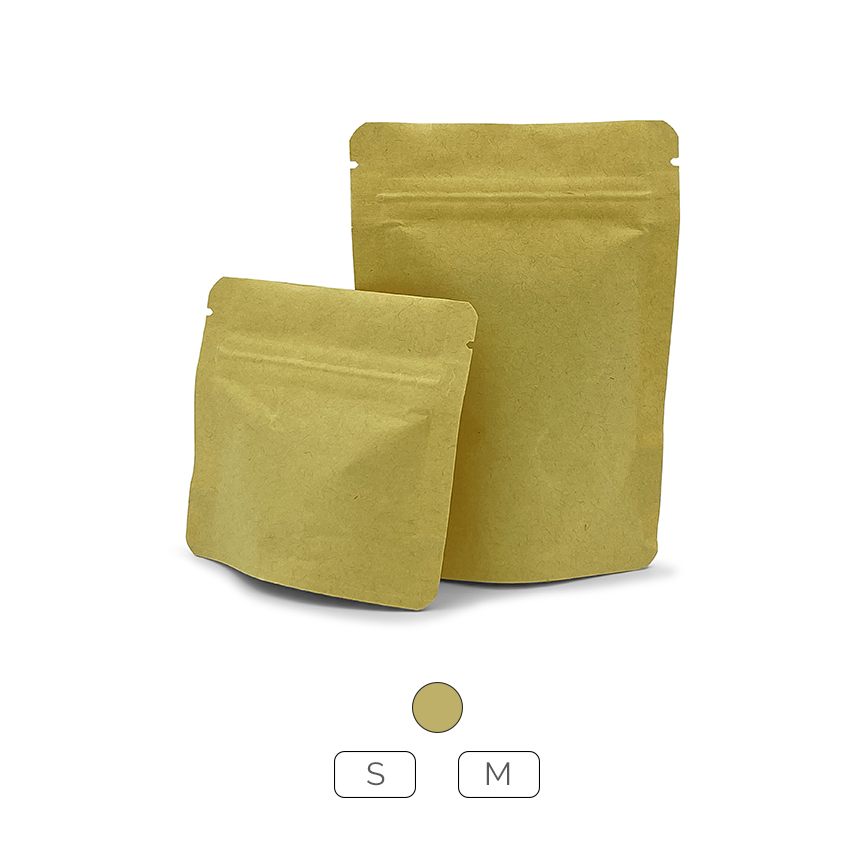
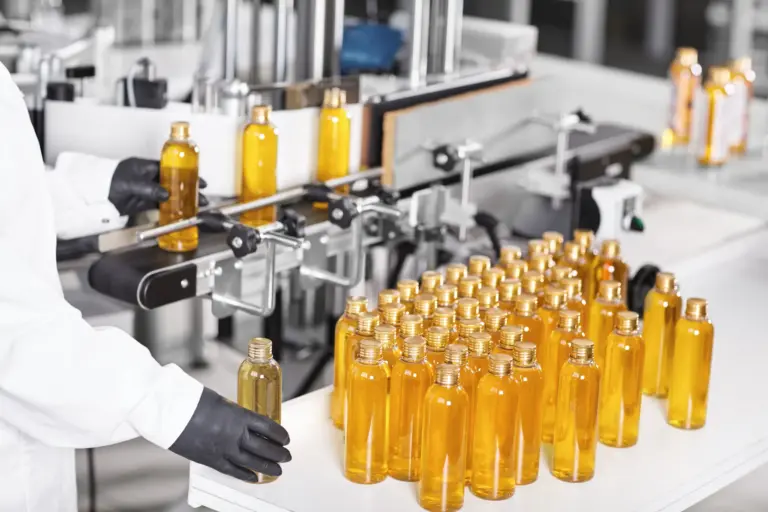
On modern packaging lines, this process unfolds in a fraction of a second. A flat pouch is formed, filled, and sealed in a continuous sequence, where the sealing temperature, jaw pressure, and contact time determine a weld designed to hold for months or even years. A two-millimeter defect in that weld is invisible on the day of production; it is only discovered months later, once the contents have lost their aroma, moisture, or efficacy. The very first second of a package’s existence holds, in potential, its entire future.
The first promise: what the packaging guarantees before it even exists
Every industrial package is created with a technical promise: to maintain its contents under specific conditions for a set period of time. This promise is embodied in the technical specifications—covering factors such as oxygen permeability, light transmission, moisture resistance, chemical compatibility, and the torque required to open the closure. Companies that interpret these figures for what they truly are—a time-based contract—are better positioned to negotiate with suppliers and design superior products. Those that view them merely as red tape end up purchasing packaging that ages faster than the contents it is meant to hold.
The practical consequence is straightforward: the choice of packaging is a decision about shelf life—not about aesthetics or unit price. The right material is the one that stays with the product for exactly the amount of time the product requires—not a day more, nor a day less.
2. Maturity: the warehouse
Light, humidity, and shelf life
Between its creation and its final use, packaging goes through its least visible yet most critical phase: storage. For weeks or months, the finished product sits on pallets, on shelves, or in containers, exposed to three silent agents: light, humidity, and time.
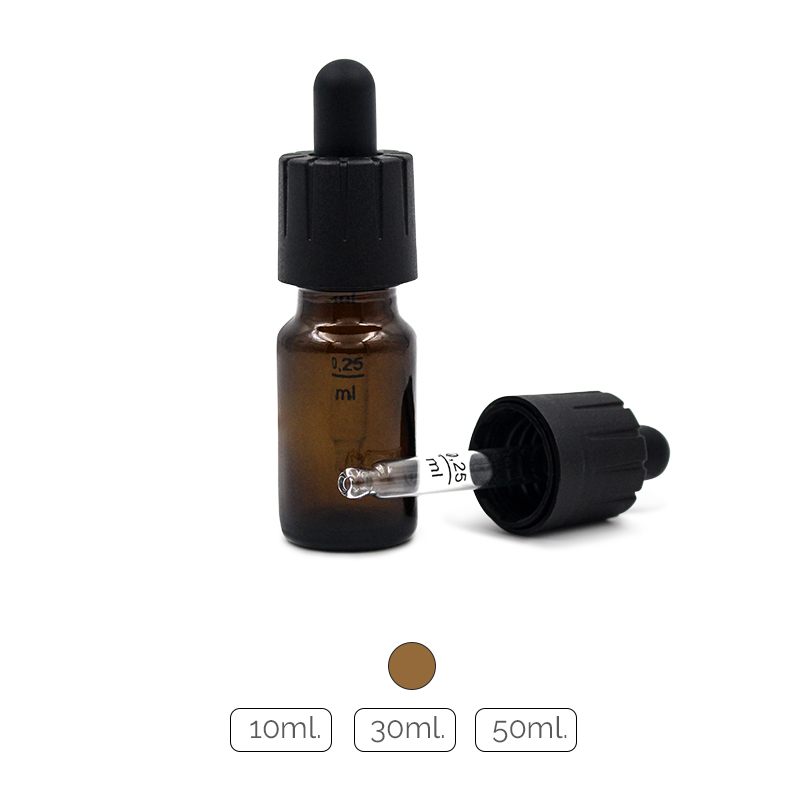
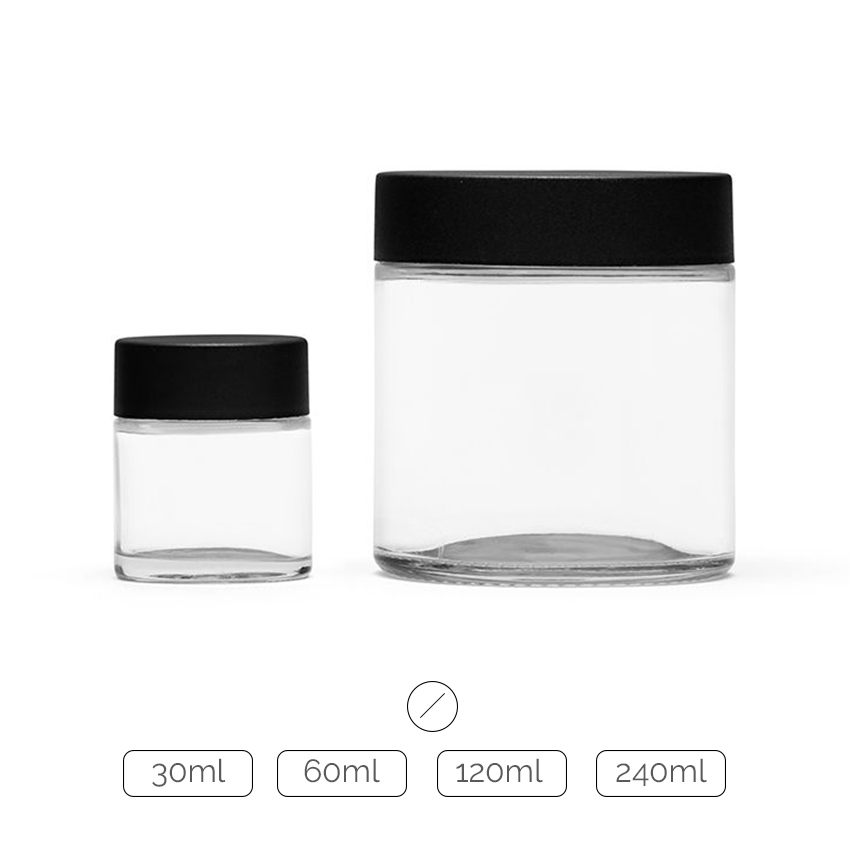
Light is the most treacherous aggressor. Many active ingredients—whether pharmaceutical, cosmetic, or botanical—suffer. photodegradation: the radiation alters their chemical structure and reduces their effectiveness. For this reason, the amber glass containers or containers made of opaque materials These are not an aesthetic preference, but rather a technical response to a measurable risk. Humidity works in the opposite direction, yet follows the same logic: a dry product will either absorb water vapor from its surroundings or lose moisture to them—both processes compromise quality. Finally, the passage of time causes even an intact package to age: plastic materials may release additives, seals lose their elasticity, and aromas can migrate.
The pharmaceutical industry formalized this reality decades ago. The stability guidelines of the International Council for Harmonisation (ICH) classify the world into climatic zones and require each product to demonstrate that it can withstand the conditions of its specific zone throughout its intended shelf life. This discipline, which originated in the laboratory, is fully applicable to cosmetics, nutraceuticals, and any other product category with sensitive value.
The packaging as its own climate-controlled storage unit
The conclusion at this stage represents a reversal of the conventional perspective. A good warehouse cannot compensate for poor packaging, but good packaging protects its contents regardless of the warehouse environment. Packaging functions as a portable microclimate: it maintains an internal atmosphere distinct from the external one, with oxygen, humidity, and light levels regulated by its materials and closures. A high-barrier film, tinted glass, an induction seal, or an airtight-sealed bag are, strictly speaking, miniature climate-control devices.
Companies that internalize this concept stop asking how much the packaging costs and start asking what the cost is in terms of lost service life when the packaging fails. The calculation almost always yields the same result: the right packaging is the one that proves inexpensive over time.
3. Labor: the retail counter and the home
Opening: the moment of greatest risk
The first opening is the critical juncture in the entire life cycle of a package. Up until that moment, the contents have existed under the conditions established by the manufacturer; from that moment on, they exist under the conditions of the outside world. The industry has developed two complementary solutions for this stage: child-resistant closures, which hinder unintended opening, and tamper-evident seals, which guarantee that the package has not been opened previously. More than mere pieces of plastic or aluminum, both serve as legal milestones in the life of a product: they delineate the boundary between the manufacturer’s responsibility and that of the user.
The design of that specific moment deserves the same attention as the design of the rest of the packaging. An opening mechanism that requires excessive force frustrates the user, while one that offers no resistance at all breeds distrust. A well-measured click—with its calibrated resistance and tactile feedback—conveys integrity without the need for words.
Degradation through use: closures that never quite close the same way again.
Once opened for the first time, a container begins a “second life,” accompanied by a process of silent degradation. A screw-top closure loses precision with each use; a resealable zipper loses contact pressure; a silicone stopper accumulates residue. In the cosmetics sector, this reality is acknowledged by European regulations: Regulation (EU) 1223/2009 mandates that—for products with a minimum shelf life exceeding thirty months—the “period after opening” (PAO) must be indicated, defining the timeframe during which the product remains safe for the consumer. The food and nutraceutical industries apply a similar logic, using their own specific timeframes.
The message for the professional buyer is uncomfortable but useful: the packaging that provides good protection on the day of purchase is not necessarily the same packaging that provides good protection on the fortieth day of use. Materials and closures must be evaluated based on their performance over time—throughout their service life—rather than just their initial, “as-new” state.
4. End-of-life: the conclusion of the useful life
Recycling, composting, and reuse
Once its contents are gone, a container enters its fourth stage of life. What happens then depends largely on decisions made much earlier—at its very inception. A monomaterial container is easily recycled, whereas one composed of inseparable layers has its lifespan cut short. A certified compostable container returns its materials to the biological cycle, while a container designed for longevity may enjoy a second life as a household object or a refillable vessel.
Design for end-of-life is now a professional competency, not a marketing afterthought.
Choosing between glass, aluminum, single-material plastic, or composite film also means determining how the packaging will age—a choice that carries increasingly tangible economic and regulatory consequences.
The European packaging regulation and end-of-life responsibility
Europe has turned end-of-life management into a legal obligation. Regulation (EU) 2025/40 on packaging and packaging waste—which replaces the previous directive—establishes design requirements across the entire Union: packaging must be increasingly recyclable, incorporate minimum levels of recycled content (in the case of plastics), and have its weight and volume reduced to the absolute minimum necessary. Furthermore, the principle of extended producer responsibility shifts the cost of waste management onto the party that places the packaging on the market.
For a company that purchases packaging, the “fourth age” of its containers is no longer an external issue: it has become a cost item, a compliance requirement, and a source of reputational risk. Packaging that ages well is packaging that was well-conceived from the start.
What a company is actually buying: years of packaging, not packages.
Selection criteria based on the intended age for the content
The chronology of packaging can be summarized by one operational principle: the packaging must be chosen based on the expected lifespan of its contents. A light-sensitive essential oil requires an opaque beginning and a dark maturity. A moisture-sensitive dry product requires a vapor barrier and a later stage of life featuring a high-quality, resealable closure. A formula with a long shelf life demands materials that age with dignity. Furthermore, any product placed on the European market requires a fourth, legal stage: an end-of-life phase that complies with current regulations.
Translated into a set of purchasing terms, this principle gives rise to four questions that every company should ask itself before placing an order:
How long the contents should last
What conditions it will be subjected to during storage, transport, and use
What will happen after it is first opened
What the regulatory fate of the empty packaging will be
A supplier capable of addressing all four points with data, technical specifications, and certifications is not merely selling packaging; they are selling time—which, ultimately, is the only thing that packaging truly contains. For any brand that considers these questions with due rigor, evaluating the responses provided by their current supplier is the best starting point.
Sources and references
Source
Brief description
URL
Regulation (EU) 2025/40 (EUR-Lex)
Regulation on packaging and packaging waste: requirements for recyclability, recycled content, and producer responsibility.